
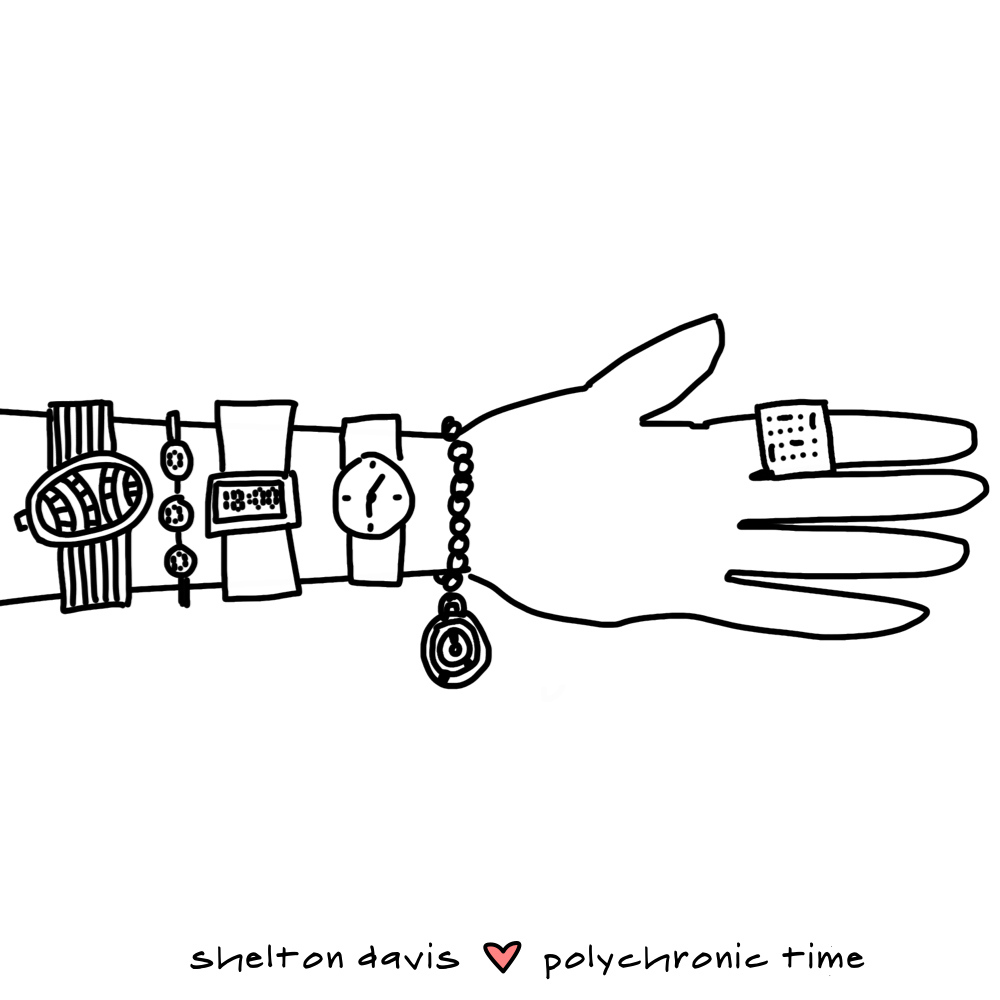
This is NOT a linear thought – I am all over the place. So, you’ve been warned!
I am in a weird place, in a weird world, within a culture that I seem to be allergic to. My mom said something along these lines constantly to me when she was alive, “I don’t belong here…” I understood this not as, “I want to die” because she enjoyed life so much. I understood this as, “My rhythm doesn’t fit into this culture.” I get it, mom. Same!
I don’t think all cultures are bad for my health, but I do think that I am living in one that is actively harming me by design. American culture and Western culture have felt more draining than giving recently and my continuous observation of people around me has left me feeling empty in a way that is not solvable with American / Western remedies. Go to the gym, find a craft, study a subject, work more, relax more, fuck more, run more, be more patient, be more action oriented, do more to get you out of this empty mindset. Yet, those aren’t answers, they are distractions to something that is underlying. Time. Time feels like part of the trap because everything in this culture feels focused on now, the immediate moment, the productive minute, the preciousness of this second, when the in reality, the expanse of time is so huge that these seconds, moments, and hours seem so very inconsequential. Life in the fragile “now moments” create a stress within me that doesn’t feel honoring of life at all, feels like an affront and attempt to extract from versus expand with. We judge moments in time so harshly that we forget to see the broader reality and collective flow we get to be within.
When I hear “be within the moment”, I think, focus on “right now”. My mind tends to sharpen and goes to the needlepoint of “now” when in reality my mind needs to zoom out beyond time and space to the milky way and gaze back at me. I can get to this milky way perspective, this beyond myself perspective, but it takes getting away from this culture to get there. I experience this expanse when I walk, run, skip, sit in the woods near my house. Sans phone or watch, podcast or phone call, the trees, birds, bees, squirrels, and the breeze are all part of “in the moment”. They are not static or still, they are not keeping time or anticipating a phone notification, they are moving at their own paces through a time they don’t keep. They aren’t worried about being “more productive” or “less annoying”, they are just being trees, being rocks, being streams of water, being birds floating on the wind. Okay, so, nature is beyond the confines of productivity schedules and time deadlines, but what about humans? We are all trapped in this monochronic time machine that is actively draining us of life. Cool. Yup, I don’t belong here either, mom.
No, I am not writing this while high – I don’t think I would be capable of such an act…but maybe I will try that some day. Coffee, a light breakfast, thoughts of past civilizations living on polychronic time, and a desire to find a different flow are all fueling these thoughts at the moment.
Learning about polychronic time
Grayson and I are watching a documentary on ancient civilizations and part of these series talked about the use of time and calendars, specifically the Mayan / MesoAmerican long form calendar and how these cultures where able to build a thriving culture on a polychronic time system.
Anthropologist Edward T. Hall introduced the concept of monochronic and polychronic time cultures. Monochronic cultures, such as those in the United States, Germany, and Japan, view time as linear, with tasks needing to be completed sequentially. People in these cultures tend to schedule their days rigidly and view lateness as disrespectful. In contrast, polychronic cultures, such as those in Mexico, India, and the Philippines, embrace a more fluid perception of time. People in polychronic societies often multitask, prioritize relationships over strict scheduling, and see time as something flexible rather than absolute.
Two things stood out to me. First, the long form calendar took into consideration more than just our one human lifetime or a few generations of life because it was based on much larger swaths of time. It was measured by seasons, stars, and the planetary movements which could take hundreds of years. More time doesn’t mean less detail, it means more opportunity and growth. It appreciates evolution and the many systems working at the same time. Second, to my understanding, this larger scale scope of time allows for a looser focus and less stress in the moment. Rather than single focus, single action (monochronic thinking) a larger time scale can allow for many focuses and fluidity (polychronic thinking). With a calendar that appreciates larger scales and many systems within it, so do the people. People in these polychronic cultures appreciate more than one job, one relationship, one kid, one diety. When we talk about “kids being raised by the community” I think they have this down (no evidence, research on this). To be a part of a community is more than going to the gym or church with others, more than just being neighbors, it is a shared responsibility for each other, for the land, animals, water, and trees. While we might be great one one thing, but in polychronic cultures, we can be helpful at many others AND the community needs this in order to thrive and survive.
We don’t live in a society that values polychronic behavior, yet desperately needs, wants, desires it. This is why those raised in polychronic cultures struggle and feel empty within monochronic cultures. This is why my mom continued to say to me, “I don’t belong here.” Relationships come after productivity results. Freedom to live comfortable comes after your economic impact. Collaboration comes after “getting mine”. People and children become possessions and billionaires become leaders. Depression and loneliness are problems we must work through on our own, if we have the resources to do so.
My mom was raised in several villages along the Congo river by my grandparents and the villages of people they lived with. She might have been the least melanated African, but she was still part of the community. The villagers were most likely a polychronic culture while still deeply intrenched in fighting for their independence against Western and European cultures. She saw what it was like to struggle and survive, what it was like to be in community and be a responsible community member. When she arrived in the United States for good in the late 1960, America was the complete opposite. The struggle here was different and the same, freedom from Western and European cultures that created America in the first place. The civil rights movement did secure many needed and necessary rights for Americans, but it didn’t change the foundation of this culture. We are still stuck in a short view of time that denies history in order to hold true to a monochronic, monotheistic, monogamic culture that benefits few and controls many.
My mom was correct, “I don’t belong here.” And, I am not going anywhere and yes, I know “I belong.” I am just going to stop trying to assimilate + appease to the mono-focused cultures and let myself be more open to the seasons, stars, experiences, and people that see and feel the bigger picture. I belong to the stars. We all belong to the galaxy.
Sources:
Wikipedia: chronemics, monochronic time, polychronic time, Mesoamerican Long Count calendar
The Hidden Language of Time: How Cultures Shaped the Way We Experience Time, Aggeliki Vouvousi, March 23, 2025
Living Maya Time, calendar information and Gregorian to Maya long calendar calculator
Ancient Apocalypse The Americas, Netflix, with Graham Hancock
Platanos and Polychronic Time, How Puerto Rico Transformed My Clock by Isabella Lashley , ReVista Harvard Review of Latin America
 Hello, I am Shelton.