
Background
In 2018, Nationwide Insurance had recently started developing an internal innovation practice in order to purposefully invest in the company’s future. With a large internal UX design and research team as well as many business strategists across the large Columbus, Ohio campus, most of the team’s members were well versed in the details and strategy of Nationwide’s current products, yet they didn’t have a process of innovation across the company to bring new ideas, customers, and strategies in. This is where my design background thrives; where new perspectives are needed, purposeful exploration is encouraged, rapid prototyping of concepts is celebrated, and getting innovations ready for market is where I am in flow
I worked with Nationwide Insurance’s Innovation CoOperative for about 3 years as an UX consultant, helped 8 different teams learn, practice, and implement a Design Thinking / double diamond design process to successfully explore different markets, users, and products. My approach focused on leveraging empathetic practices (internal with team and external with potential users) and rapid prototyping in order to address underserved markets and solutions quickly. During my tenure at Nationwide, a major focus of my UX consulting was on Americans transitioning into retirement. This role demonstrated my capabilities in user-centered design, strategic leadership, team management, innovative problem-solving, and driving product innovation from concept to market success.
Nationwide’s capabilities and innovation endeavors were vast and full of potential. I helped teams synthesize research for a project on a collaborative home owner + professional video guided repairs, design A/B tests for pet insurance products, integrate the Columbus start-up community with Nationwide executives, create research guides exploring the new mom’s space, taught teams the Design Thinking process, and did several sprints exploring American’s transitioning into retirement. For this portfolio piece, I will be focusing on a project we called Goldilocks because we were searching for the best way to help retirees transition into retirement.
Overall Challenges and Solutions to Innovation at Nationwide
Challenges
- Established practices, products, and legacy systems
- Lack of an innovation process or innovation leadership
- Long tail design and development workflows
- Everyone wanted to know what was going on and be heard which lead to massive confusion. Utilized DACI models
- Quantitative approach to user research and data gathering.
- Slow design turn over and it was typically high fidelity
- Lengthy review and feedback models lead to deeper attachments to a team’s production value
- In-office work across multiple campuses and with field research lead to difficult collaborations based on the current syetm
- Top down driven design because the design and development cycles were lengthy
- Cubicles, meeting rooms, and board rooms lead to very little “teaming”
Solutions
- Strategic partnerships throughout NW
- Teaching, supporting, and training a Design Thinking innovation process
- Sprint schedule with sprint teams
- Utilizing DACI models with teams, management, and executives
- In-person ethnographic research paired with analytic data from marketing + business strategy partnership
- Rapid prototyping (low fidelity to high fidelity)
- Continuous feedback models and process training with those on the project’s DACI
- In-person and hybrid working utilizing tools like Miro, Zoom, Slack, and basic collaborative file sharing
- Continuous business validation and integration with NW management and executives
- Whiteboards, collaborative prototyping, and a central “design studio” per team AMONGST other innovation teams
Project Focus : American’s Transitioning into Retirement
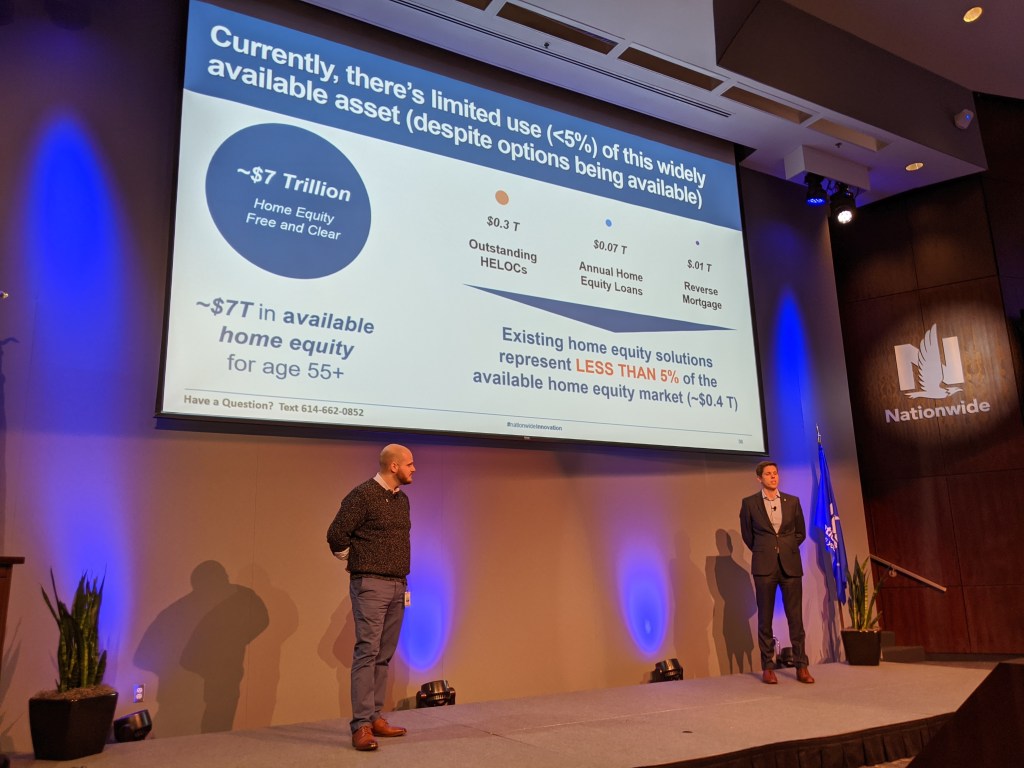
We grappled with two strategic reasons why we wanted to help American’s as they transitioned into retirement. Nationwide’s business strategy team was focused on the untapped 7 trillion dollar home equity market that retirees were sitting on and we discovered through ethnographic research that his very same population consisted of underserved and over-poached individuals and couples that lacked financial knowledge and confidence as they moved into retirement. We talked to hundreds of American’s in different stages of retirement, from those still working to those needing assistance to live in their home, and discovered one universal truth – that they didn’t trust anyone specifically in their retirement process, yet really wanted someone to trust and talk with. We were surprised to find out that most of the retirees we interviewed were DIYing their retirement process because they either felt like they lacked funds, have been burned before, or just didn’t think they would ever grow old enough to need a plan. With this knowledge and understanding, we prototyped a many solutions that helped them gain knowledge, build trust, and confidently make decisions about their retirement. From a retirement game like monopoly to the final collaborative retirement coaching solution that is now patented.
Design Process:
We followed (taught and coached) the Design Thinking methodology with a 2 week sprint cycle in order to create a system and quick cadence for innovative learning. I acted as the lead product designer for all the projects and either supported or lead the research side of the projects. I had my hands in all aspects of the process and made sure that business strategy, marketing, development, and executive management were involved in each step as required by our team’s DACI.
User research, empathy gathering

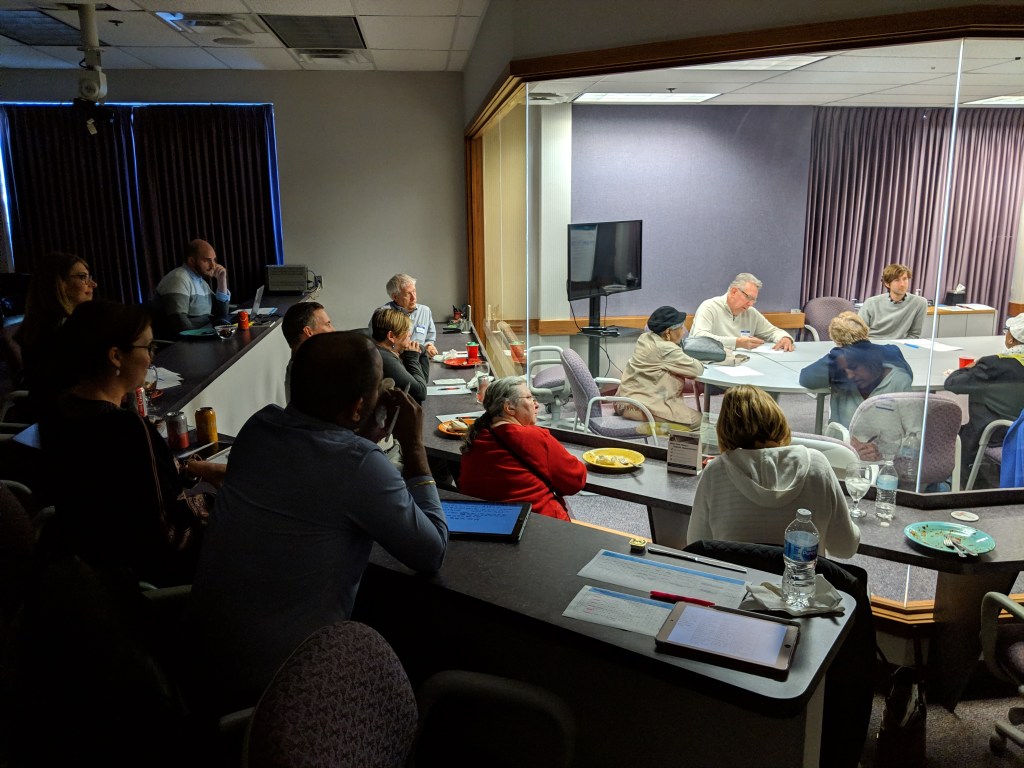
While the above photos look like focus groups, what they really represent are a couple of things.
- First, this is a progressive ethnography, everyone in the room was interviewed BEFORE they were put into multiple group settings. Because we were in-home for the one-on-one interviews, I cannot share those photos for privacy purposes. We brought them together in two groups, the kids supporting their parents transition into retirement AND a completely un-related set of retirees with kids. Our objective was to know more about trust, transition, and tools needed to make these large family transitions.
- Second, by bringing participants into one place in the Columbus, Ohio area, we were able to invite executives, engineers, and partners to sit behind the glass and hear what we heard. We could give some of our partners ALL of the data in pretty Powerpoint presentations, but it was this in-person experience that persuaded them to invest in company wide innovation. Their buy in allowed us to continue our research, involve their team members more often, and collaborate on similar projects.
Data analysis and synthesis
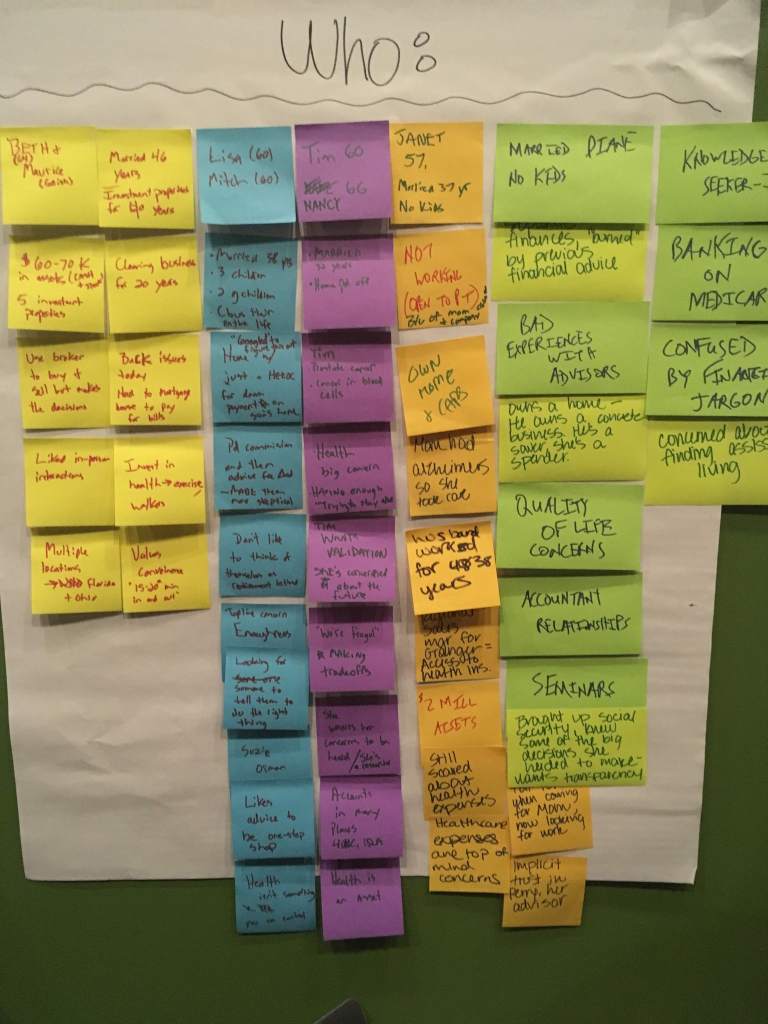


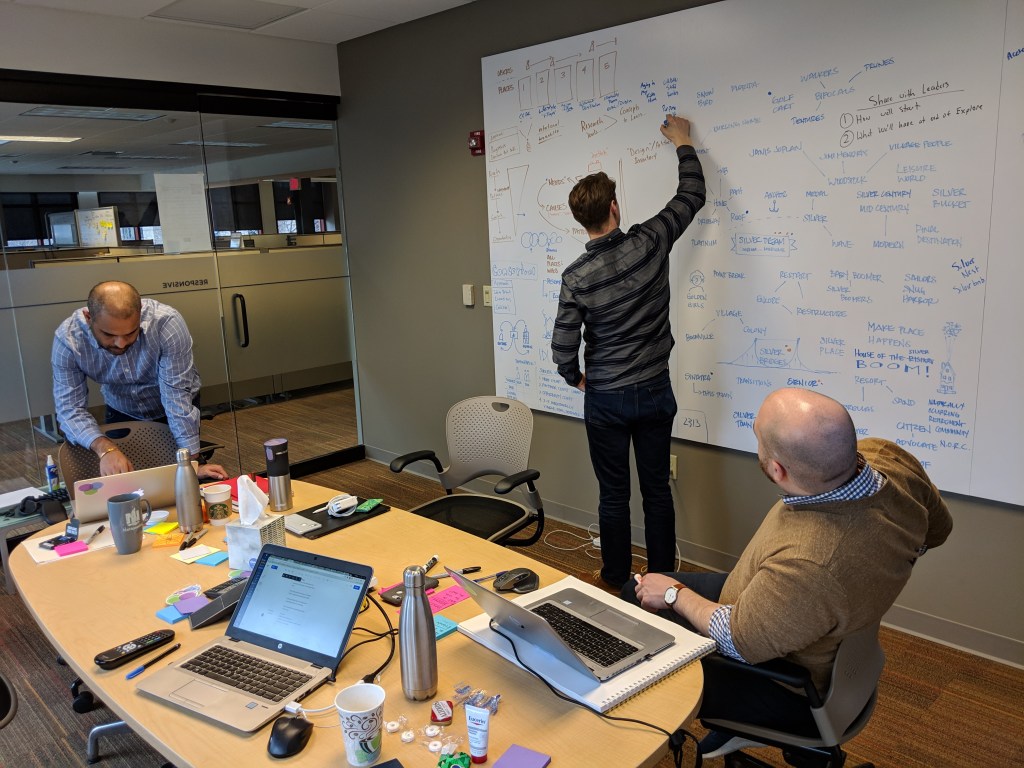
This is always the most difficult part, but we were able to get everything out of our heads, call our each others biases, and find solutions that worked best for our users and business capabilities. Many hours, many cups of tea, and countless “elephant” in the room conversations.
Iterative design
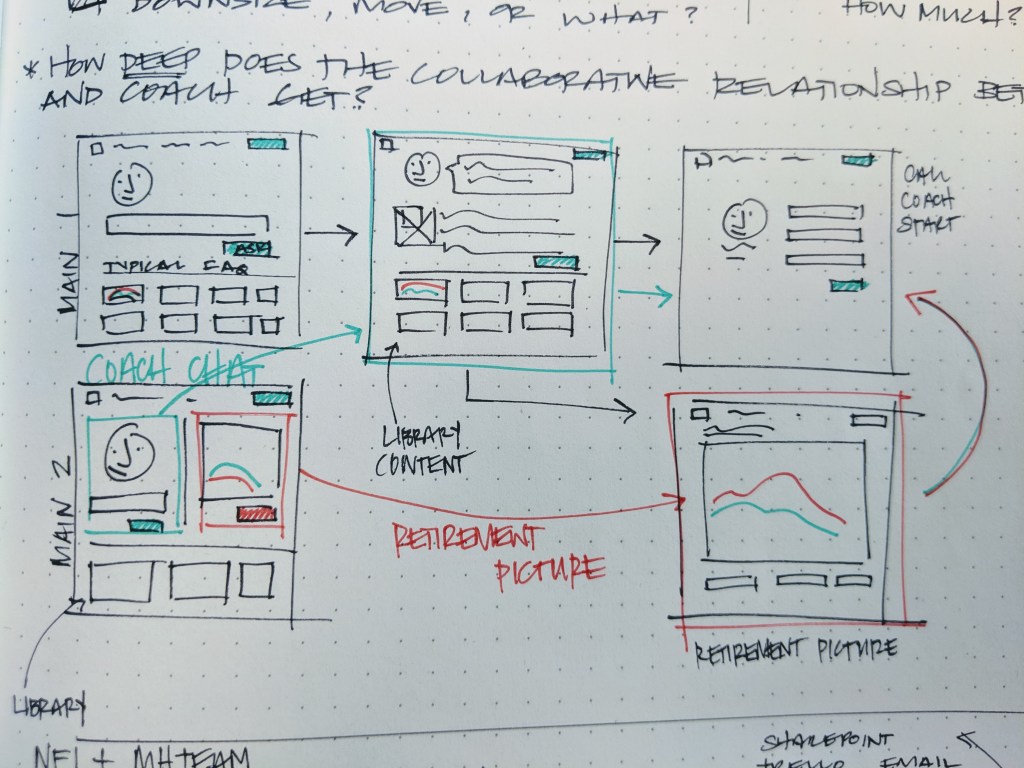
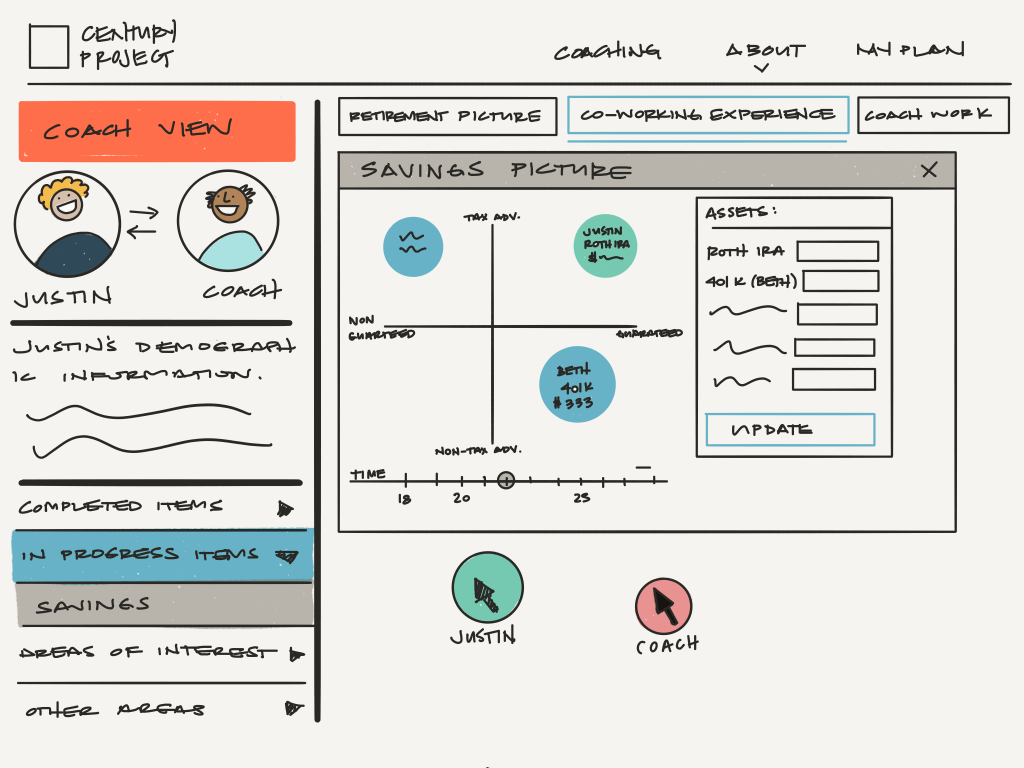

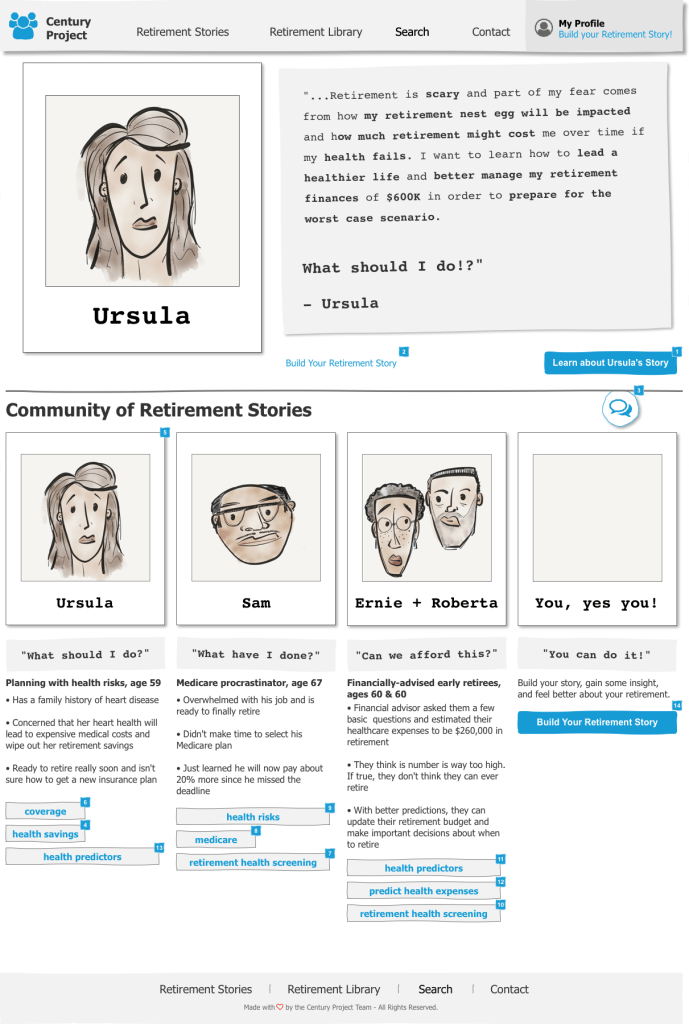
I would take many of our notes home to Atlanta from Columbus and start churning out sketches, low-fidelity designs, and click through prototypes to help capture solutions we heard from research. Sketching on my iPad, bringing sketches into Sketch and ramping up the fidelity, and sometimes jumping into Axure or Adobe XD depending on the output needed for the development team.
Prototyping for re-resting
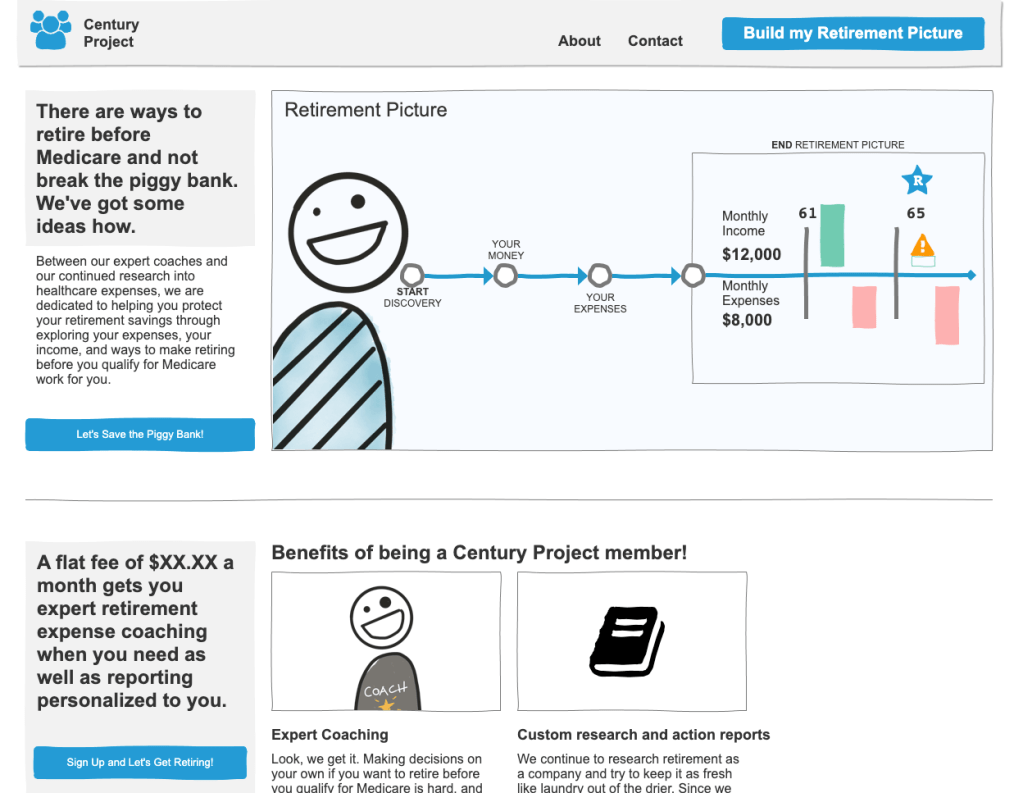
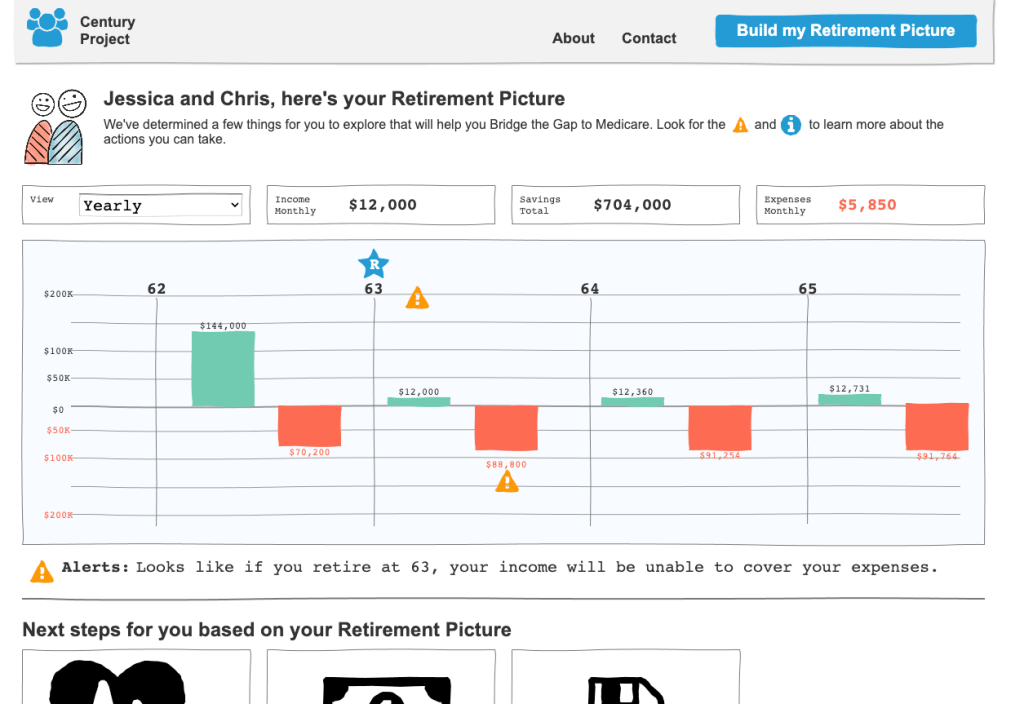

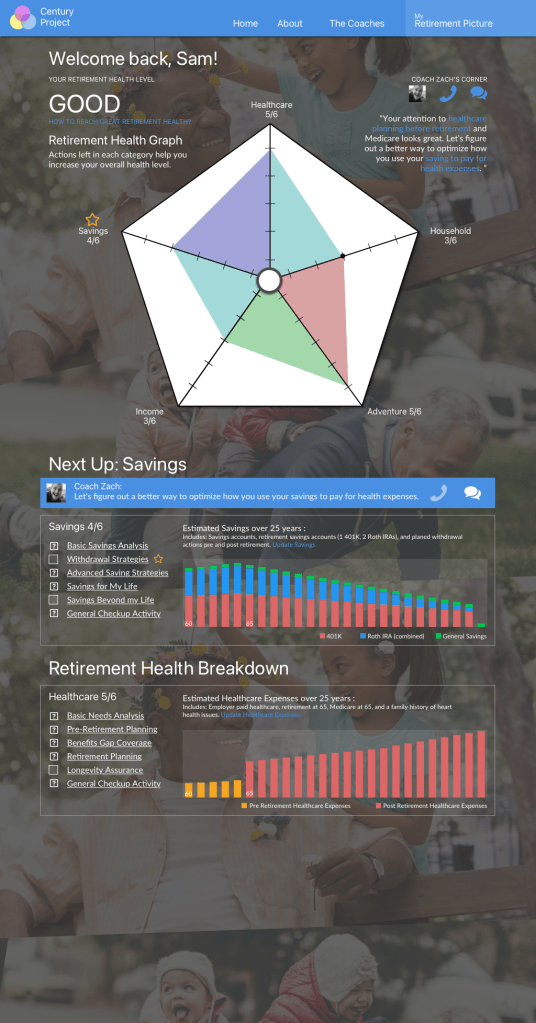
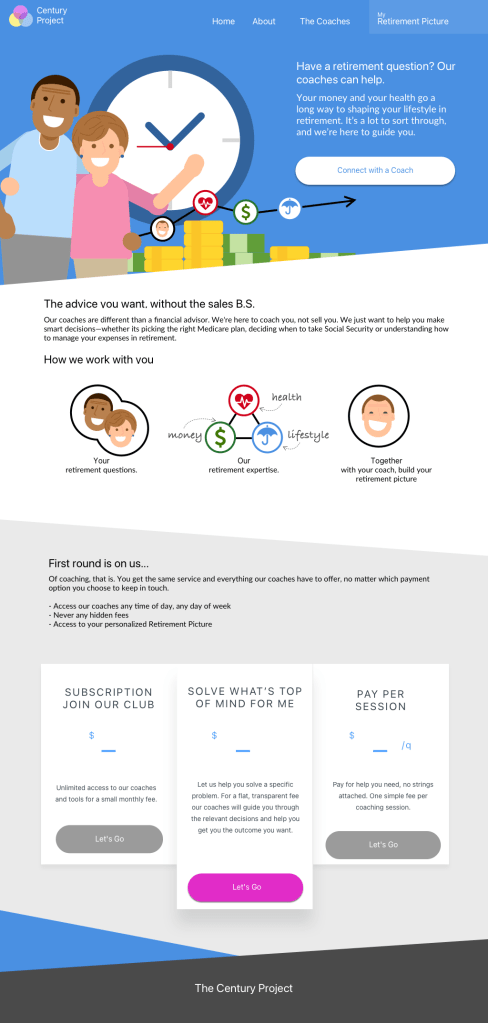
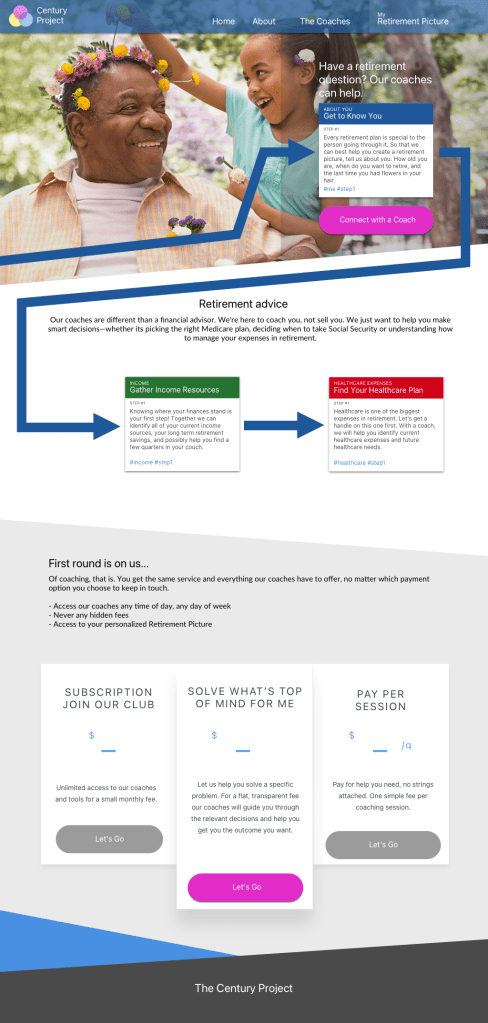
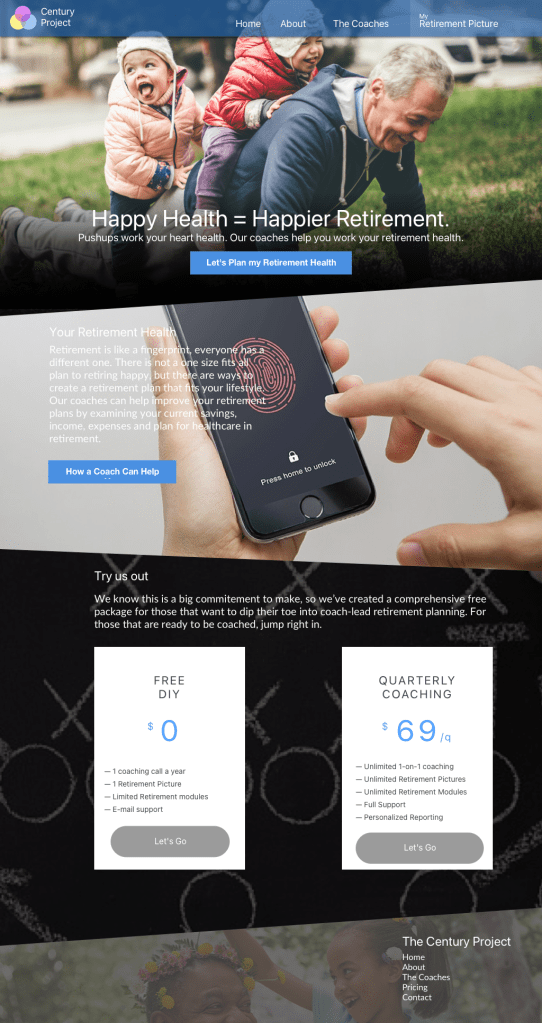
Through many rounds of iteration and user research, this is our version 5 prototype here that helped retirees create a “Retirement Picture” that they could DIY from or get professional coaching / advising from. We realized that they wanted more control of their information input, but didn’t want to be told right off the bat what to do. This lower fidelity prototype helped them poke at what worked in the experience rather than focus on the detailed design and exact flow.
High fidelity prototypes for internal exploration
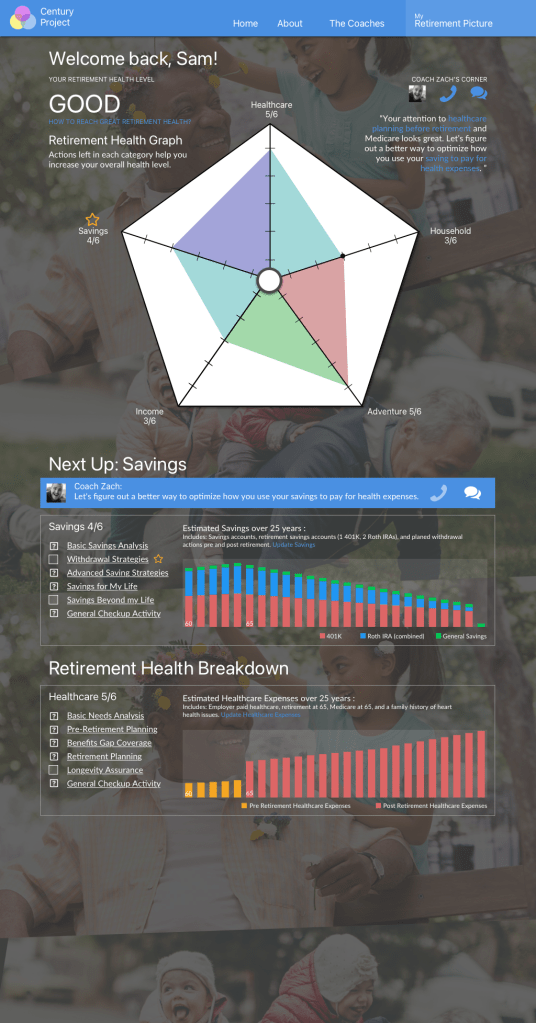
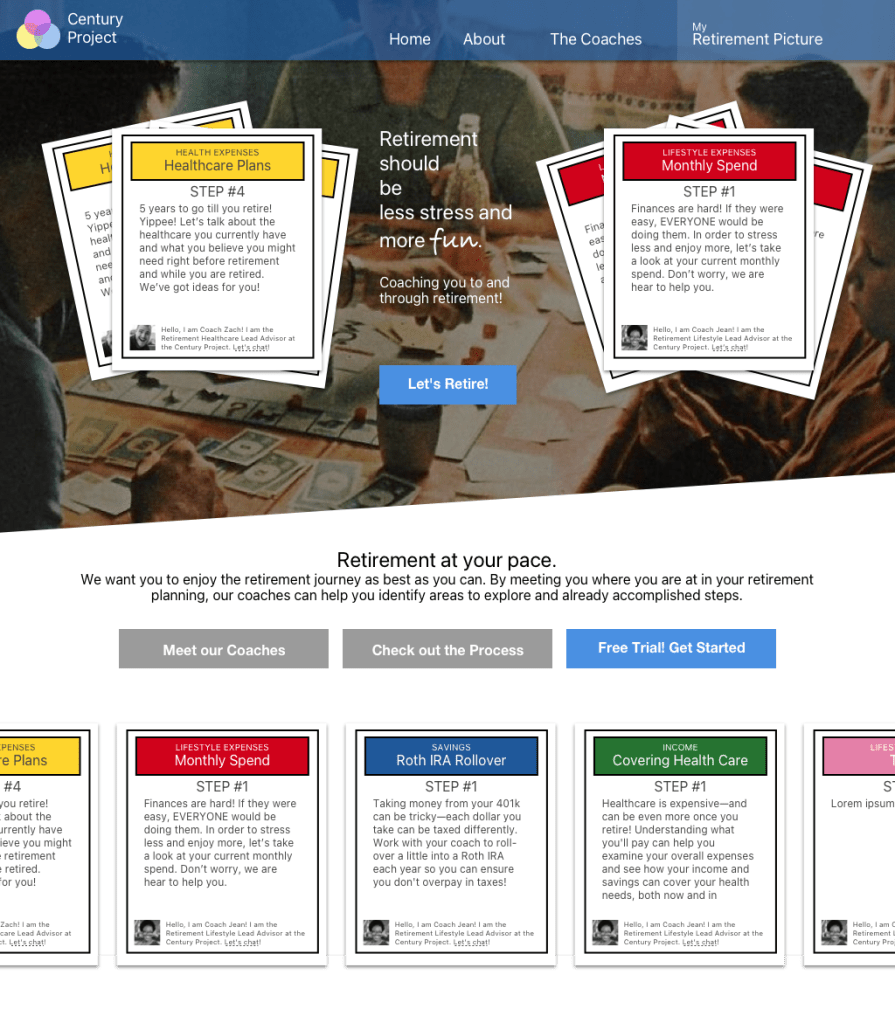

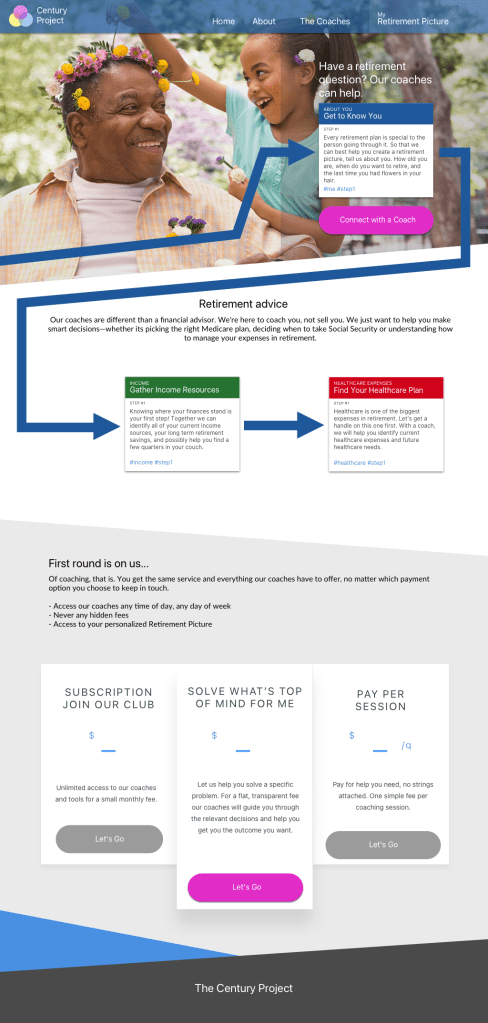

Some of the prototypes went into full development cycles with internal development teams, with IBM/TCS, or with a small development group on my team. Live examples can be shared upon request.
- Here is one of the earlier click through prototypes created as an example : Mid fidelity click through prototype exploring what information retirees were willing to give us in order to create a retirement picture for them.
- After several phases of mid to high fidelity prototypes, I worked directly with a front end developer to utilize and update Nationwide’s current design library and created this Angular UI example.
- Currently My Health Care Estimator is one of the live, public tools that is supported by the work done with Nationwide.
 Hello, I am Shelton.