
Background
Empathy Lab was founded with a mission to delve into the realm of workshops and the creation of team cultures that thrive on empathy. Over the initial years, we dedicated ourselves to disseminating the academic and business rationale underpinning the value of practicing empathy. Despite our efforts, I encountered hesitation and confusion among the attendees. It became evident that while the importance of empathy resonated with them, the research presented left them bewildered and, surprisingly, somewhat indifferent. The leap from understanding to actionable practice was daunting. Attendees of our early workshops could vocalize the necessity of empathy but stumbled when it came to laying out a pathway for its development.

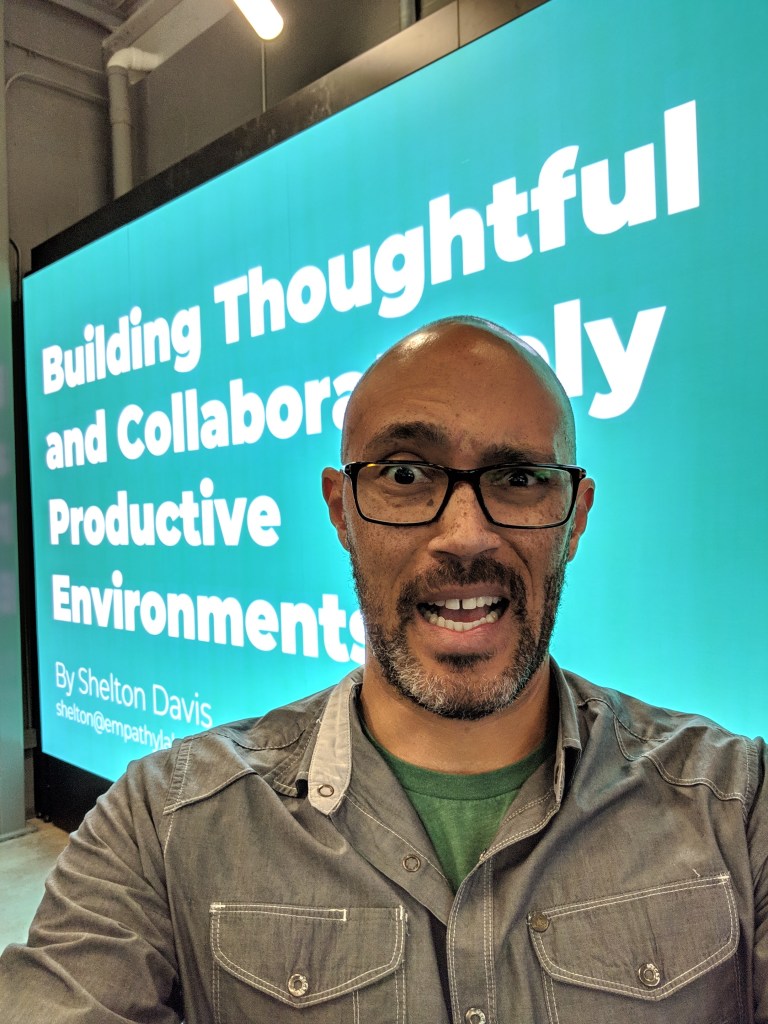

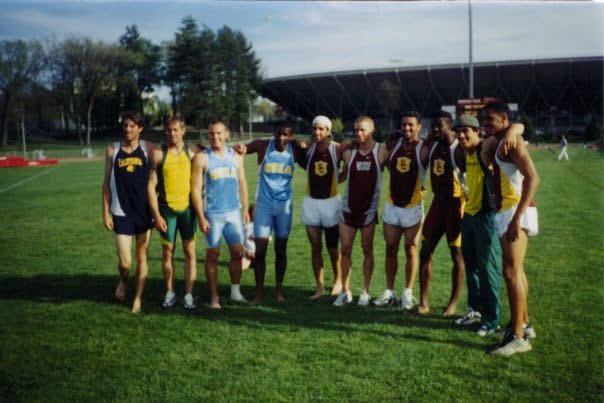
In response to this feedback, Empathy Lab took a momentary pause to reflect and reevaluate our approach. This period of introspection was pivotal. It led me to draw parallels between the journey of personal growth and my own experiences as a former decathlete. The rigorous training, the dedication to mastering not one but ten distinct track and field events, and the simplicity yet depth of athletic practice illuminated a path forward. The realization was clear: to foster a genuine, widespread engagement with empathy, the learning experience had to be straightforward to grasp, universally accessible, and inspired by the discipline and structure of athletic practice.
This epiphany gave birth to the Empathy Decathlon, a framework designed to make the cultivation of empathy not just comprehensible and reachable to a broad audience but also engaging and fulfilling. By channeling the essence of athletic training into the development of empathy skills, the Empathy Decathlon bridges the gap between acknowledging the need for empathy and actively building it. This innovative approach reimagines empathy training with the rigor, clarity, and enjoyment characteristic of preparing for an athletic event, making the journey of self-improvement more appealing and effective for those committed to personal and professional growth.

Overview:
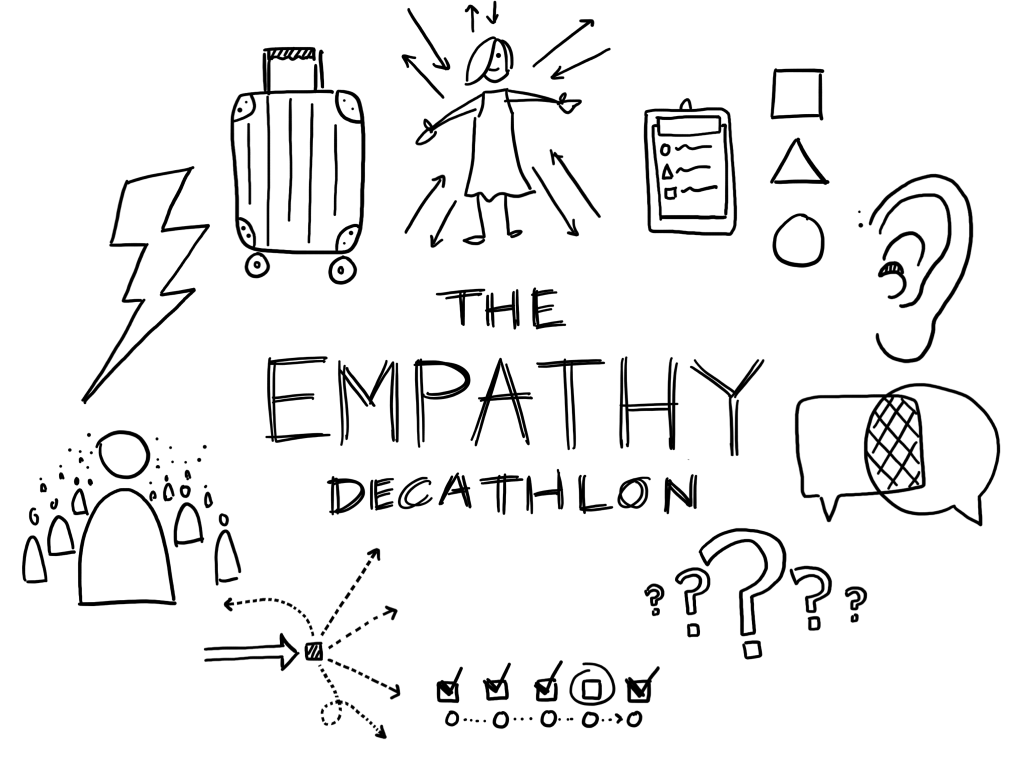
The Empathy Decathlon® is an innovative framework developed by Empathy Lab, designed to foster and enhance empathy skills across two main categories: “me-empathy” (empathy towards oneself) and “we-empathy” (empathy towards others). This comprehensive training system is structured around ten micro-skills: Energy, Baggage, Self-Awareness, Inventory, Hearing, Responding, Asking, Meaning, Feedback/Feedforward, and Leadership. By leveraging the science of human behavior, the art of human-centered design, and the discipline of track-and-field, the Empathy Decathlon’s mission is to empower individuals and teams to achieve collective success through the development and application of empathy in both personal and professional settings.
Problem:
In today’s fast-paced and increasingly digital world, the fundamental human skill of empathy is often overlooked, undervalued, or misunderstood, leading to a gap in effective communication, collaboration, and innovation within communities and organizations. Empathy Lab identified a critical need for a structured, engaging, and practical methodology to cultivate empathy skills that can bridge the gap between understanding oneself and connecting with others on a deeper level. The challenge was to create a program that is accessible, scalable, and impactful, capable of transforming empathy from a vague concept into a tangible set of skills that can be practiced and perfected.
Challenges:
- Conceptualization and Design: Translating the abstract concept of empathy into a structured, practical framework that balances educational rigor with engaging and accessible training methods. This involved extensive research, iteration, and integration of diverse methodologies from psychology, design thinking, and athletics.
- Engagement and Accessibility: Ensuring the Empathy Decathlon is inclusive and engaging for a broad audience with varying levels of familiarity with empathy as a concept and skill. Crafting exercises and practices that are relatable, easy to understand, and applicable across different contexts posed a significant challenge.
- Measuring Impact: Developing metrics and assessment tools to gauge the effectiveness of the Empathy Decathlon in enhancing empathy skills. Empathy, being a qualitative and often subjective experience, required innovative approaches to evaluation and feedback to ensure the program’s impact could be accurately measured and iterated upon.
- Adaptation and Scalability: Creating a framework that is flexible and adaptable enough to be relevant across different cultural, organizational, and individual contexts while maintaining its core objectives and integrity. This required careful consideration of the diverse ways empathy is understood and practiced around the world.
- Integration into Existing Systems: Encouraging the adoption of the Empathy Decathlon within organizations and communities that may have established norms and practices. Overcoming resistance to change and demonstrating the tangible benefits of empathy training required strategic communication and evidence-based advocacy.
Competitive Analysis
1. Design Thinking (d.school, IDEO)
- Approach: Incorporates empathy as a foundational step in understanding the user’s needs and experiences. The process involves empathetic immersion to gather deep insights.
- Competitive Edge: Widely recognized and used in product and service design, facilitating innovation.
- Limitations: Primarily focused on empathy in the context of design and innovation, which does not address the personal development aspect as comprehensively as the Empathy Decathlon.
2. Emotional Intelligence (EI) Frameworks (Daniel Goleman)
- Approach: Focuses on the ability to recognize, understand, and manage our own emotions and to recognize, understand, and influence the emotions of others. Empathy is a key component of EI.
- Competitive Edge: Offers a broad perspective on emotional competencies that facilitate interpersonal communication and leadership.
- Limitations: While encompassing empathy, EI frameworks often focus more on personal success and leadership rather than on fostering empathy as a core value.
3. Nonviolent Communication (NVC) (Marshall Rosenberg)
- Approach: A communication process that emphasizes listening with empathy and expressing oneself honestly and clearly with the intention of understanding others and being understood.
- Competitive Edge: Provides practical tools for empathetic communication in conflict resolution and personal relationships.
- Limitations: NVC is more of a communication technique than a comprehensive framework for building empathy as a multifaceted skill.
4. Mindfulness-Based Stress Reduction (MBSR) (Jon Kabat-Zinn)
- Approach: While not exclusively focused on empathy, MBSR promotes awareness and presence, which can enhance empathetic understanding and self-compassion.
- Competitive Edge: Supported by extensive research showing benefits for mental health and well-being.
- Limitations: Empathy development is more of an indirect outcome of mindfulness practice rather than the primary focus.
5. Compassionate Leadership Programs
- Approach: Various programs and workshops aim to develop leaders who lead with compassion, empathy, and emotional intelligence, focusing on organizational contexts.
- Competitive Edge: Tailored to corporate and organizational leadership, often backed by coaching and mentorship.
- Limitations: May not be as accessible or relevant to individuals not in leadership positions or those seeking personal development outside of a corporate context.
Competitive Analysis Summary:
The Empathy Decathlon stands out by offering a structured, athletic-inspired approach to empathy development, making it unique in its delivery and engagement. Unlike some frameworks that focus on specific contexts (such as design thinking or leadership), the Empathy Decathlon offers a broad and inclusive foundation for empathy development applicable in various life areas. Its emphasis on “me-empathy” and “we-empathy” provides a comprehensive pathway for personal growth and improved interpersonal relationships, setting it apart from frameworks with narrower focuses or different primary objectives.
Design Solution
The design process of the Empathy Decathlon involved a multifaceted approach that combined elements of human behavior science, human-centered design principles, and the discipline of athletics, particularly track and field. Here’s a breakdown of the key stages in the development of the Empathy Decathlon:
- Conceptualization: The idea for the Empathy Decathlon arose from recognizing the need for a structured, engaging way to develop empathy skills. Inspired by the founder’s experiences in product and UX design, research, team leadership, and personal connection, the concept aimed to empower individuals and teams to cultivate empathy from the inside out.
- Research and Development: Extensive research into empathy, psychology, design thinking, and athletic training methodologies informed the framework’s initial development. This stage involved gathering insights from existing literature, empathy practices, and feedback from early workshops to identify core empathy skills and effective training techniques.
- Framework Creation: The Empathy Decathlon framework was structured around ten core skills, divided into “me-empathy” and “we-empathy” categories. Each skill was designed to build upon the previous, facilitating a gradual and comprehensive development of empathy capabilities. The incorporation of track-and-field terminology and concepts served to make the learning process more relatable and engaging.
- Prototyping and Testing: Early versions of the Empathy Decathlon were prototyped and tested in workshops and sessions with diverse groups. Feedback from participants was crucial in refining the exercises, practices, and overall structure of the program. This iterative process ensured that the framework was accessible, impactful, and applicable across various contexts.
- Implementation and Iteration: As the Empathy Decathlon began to be implemented in real-world settings, continuous feedback and evaluation allowed for ongoing refinement. The framework was adapted to suit different organizational cultures, community settings, and individual needs, ensuring its relevance and effectiveness.
Solution in Action
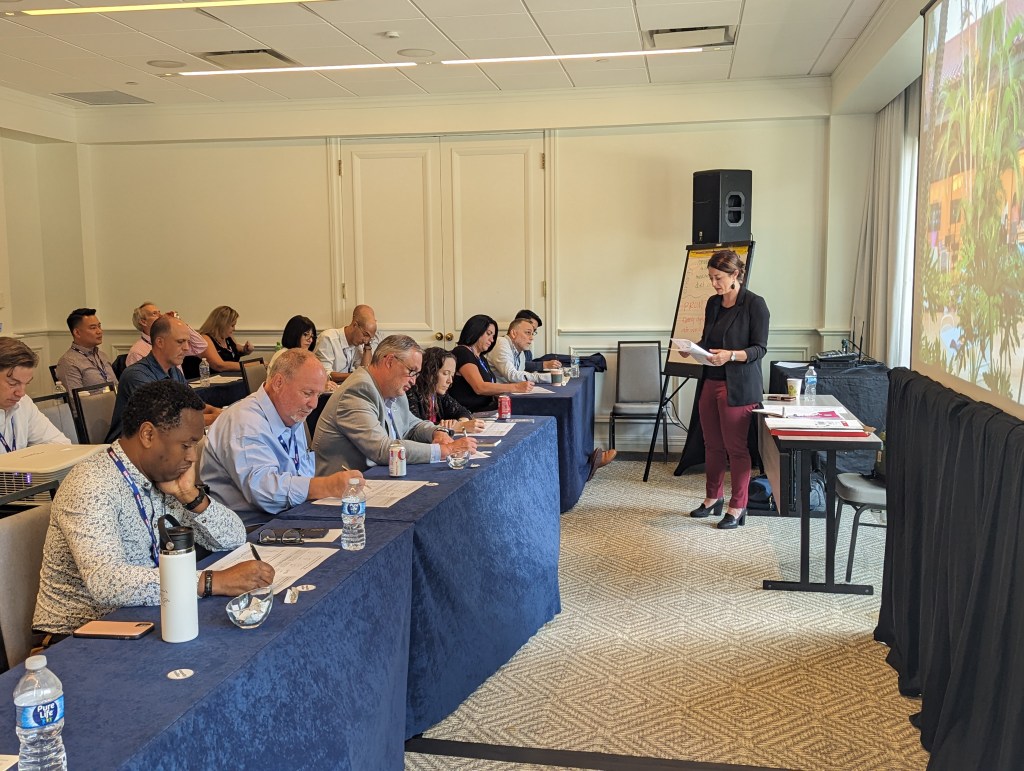

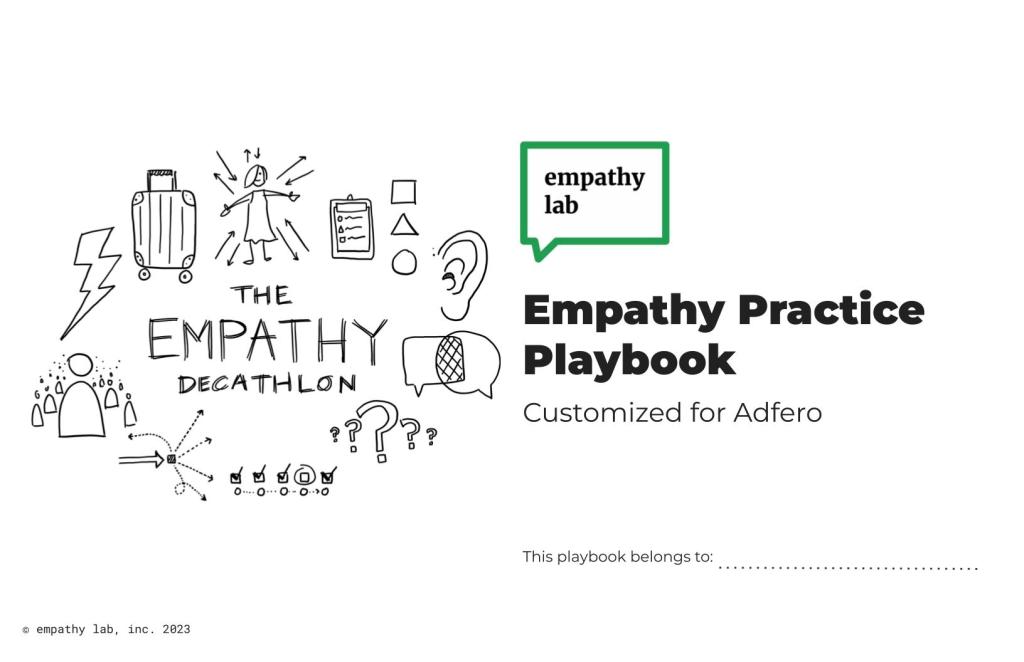
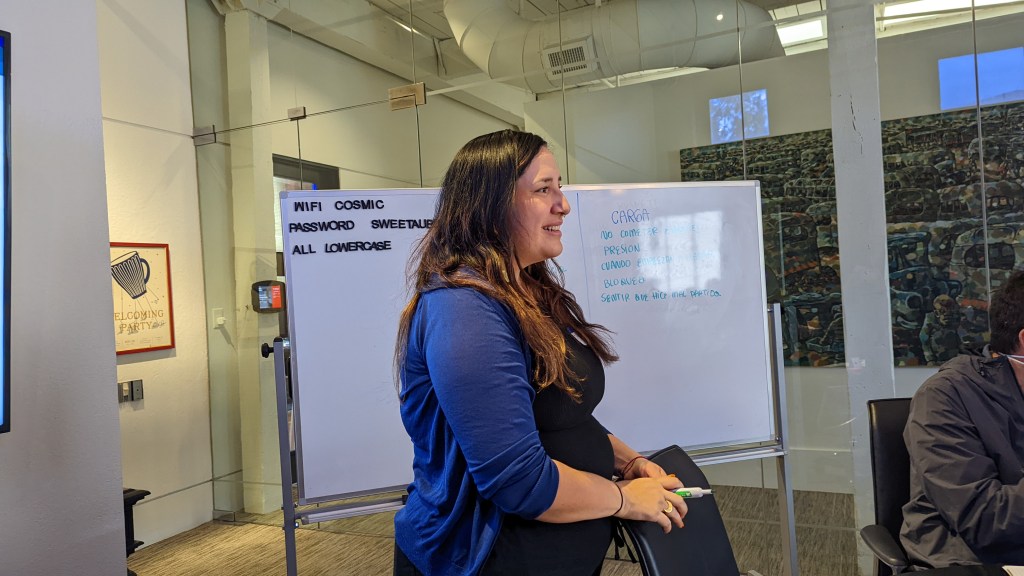
The Empathy Decathlon is applied in action through workshops, team sessions, and individual practices, each designed to enhance empathy skills through practical exercises and reflection. Here’s how it typically unfolds:
- Kickoff and Introduction: Participants are introduced to the Empathy Decathlon framework and the importance of empathy in personal and professional growth. This sets the stage for an immersive learning experience.
- Skill-by-Skill Training: Each of the ten skills is explored in detail, with participants engaging in exercises, discussions, and reflections designed to deepen their understanding and application of empathy. This includes practices like energy and baggage check-ins, self-awareness exercises, listening and responding techniques, and leadership development.
- Real-World Application: Participants are encouraged to apply what they’ve learned in their daily interactions, both within and outside the workshop setting. This might involve practicing active listening, responding neutrally and affirmatively, asking open-ended questions, and incorporating feedback and lead practices in team settings.
- Feedback and Reflection: Continuous feedback, both from facilitators and peers, helps participants refine their empathy skills. Reflective practices encourage a deeper understanding of one’s progress and areas for improvement.
- Ongoing Practice and Development: The Empathy Decathlon emphasizes the importance of continuous practice and growth. Participants are provided with tools and resources to integrate empathy practices into their everyday lives, fostering a culture of empathy within their communities and organizations.
The Empathy Decathlon’s design process and application in action reflect a commitment to making empathy a tangible, practicable skill set that can drive collective success and foster deeper human connections.

 Hello, I am Shelton.